Archimedia Studios

  • Home
  • Our Company
  • Expertise
  • Blog
  • Contact Us

Why does Fast Food always look better in Ads ?

July 10, 2012

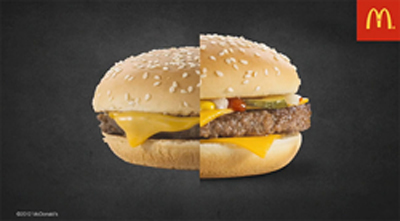
Why does McDonald’s food look so much better in ads than at the restaurant?


Ever notice how the food you buy from McDonald’s tends to look a bit well, underwhelming, compared to the giant-sized photographs of their burgers they use on their menus? If so, rest assured your curiosity doesn’t stand alone. A Canadian woman recently emailed the fast-food giants to ask them the exact same question. McDonald’s graciously responded with a 3 1/2-minute long video clip explaining why as they take us on a behind-the-scenes tour of a Quarter Pounder photoshoot (and it has received 5 million views in one week)! See it here:


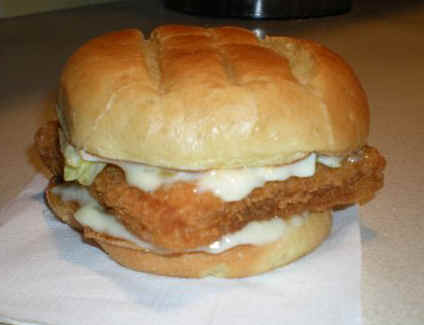
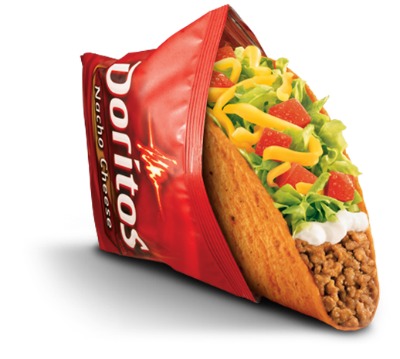
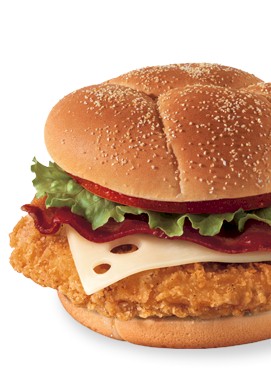
Here are a few more examples of Fast Food Photography Magic: 

(The first photograph is from an Ad, the second photograph was taken after purchase)

McDonalds Breakfast Burrito

The Burger King Big Fish Sandwich

 

Taco Bell Locos Taco


Wendy’s Chicken Club
Filed Under: Advertising, Marketing Insights

Is Vogue’s ban on ultra thin photos genuine?

May 17, 2012

Vogue’s 19 international editions will no longer feature photos of fashion models who “appear to have an eating disorder,” the magazine’s editors announced recently.

The Vogue editors said that beginning in June, editions in America, France, Britain and China, for starters, will no longer feature models with visible signs of eating disorders. It also suggested that fashion designers should stop creating “unrealistically” small samples that won’t fit anyone who isn’t ultra-thin.

“Vogue believes that good health is beautiful. Vogue editors around the world want the magazines to reflect their commitment to the health of the models who appear on the pages and the well-being of their readers,” said Conde Nast International chairman Jonathan Newhouse in a statement.

If you are a cynical to believe that Vogue’s promise is genuine, then you may view Vogue’s move as grandstanding, trying to appease an audience that is getting ever more savvy and tired of the tricks of the trade.  Is it cynical to ask the question why the fashion magazine failed to talk about the practice of digitally altering photos, a widespread practice that promotes an impossible standard of beauty?  Will they start with a non ultra thin model (keeping their promise)  and  then Photoshop them into a disturbingly thin model?

Extremely thin girls have been the ideal in fashion for years — and this may be the most push-back against the super thin movement we’ve seen in a decade. So if you really are sick of it, Vogue editors, actually do something about it. Stop talking about it, stop drawing up toothless guidelines that fit into tidy press releases, and just prove it. Don’t call in the tiny clothing samples for shoots. Don’t hire girls who are so thin you wonder if they have eating disorders. Don’t use Photoshop in the post production to digitally achieve that unrealistic thin look. Don’t only shoot Adele from the neck up.

We all hope that Vogue’s proposed new bold stance is genuine for Vogue has the power to make and break — whether its fashion trends, designers, models and yes, even industry practices. Others will follow.

More than 24 million Americans, both females and males, have an eating disorder. And eating disorders have the highest mortality rate of any mental illness, according to the National Association of Anorexia Nervosa and Associated Disorders.

Filed Under: Advertising

YouTube view counts, the game is changing

May 14, 2012

After investing $100 million to create content channels, YouTube’s focus has shifted from directing viewers to videos of skateboarding dogs to enticing them into longer, more engaging videos—the kind that are, not incidentally, more appealing to advertisers.

On March 15, YouTube altered its recommendation system to make the time spent with a video or channel a stronger indicator than a click in determining which videos to surface to a user. Google’s goal is clrearly that they want users to watch more and click less.

Before the change, YouTube would track the length of views up to 30 seconds, primarily to make sure each click led to an actual view. Now it’s tracking across longer timeframes to see if viewers watched two or three minutes of content.

It appears to be working. While views have dropped of late (Since December, views on YouTube have dropped 28%), however, the amount of minutes users spend watching YouTube has grown over the past year by 57% to more than 61 billion minutes in March 2012, according to ComScore. The average length of a video view has grown a full minute to four minutes in the past year.

There’s a business reason at play. Longer viewing means more opportunity to show viewers ads, either through strings of videos that play automatically with ads in between or longer videos with TV-like breaks. And engaged viewers are also thought to be in a more receptive mind-set for brand advertising, the biggest slice of ad dollars untapped by YouTube.

Brand advertisers are more concerned with notions such as engagement than they are by traditional web-based direct-response metrics such as clicks, said Eli Goodman, media evangelist at ComScore. “The effectiveness of advertising is enhanced when someone is in an engaged state.”

YouTube is also experimenting with more technology to decide when to show a user a video ad. Previously, that had been about once every seven minutes. Now, YouTube is using hundreds of variables to determine whether or not a viewer is engaged with a channel and likely to stick with it.

Filed Under: Advertising, Branding

Are Marketing and Ad agencies the new music labels?

May 2, 2012

Recently there has been articles in  Businessweek, Fortune and the LA Times that discussed the widespread use of music by indie artists in advertising.

While this is not a new phenomenon for the Atlanta based, Branding, Marketing and PR agency Archimedia Studios who has a long history of working with the music and film  industry, it is now a well-established practice that offers artists an excellent revenue stream. In some cases artists also get their first big hits via music that is featured in ubiquitous commercials.  Music supervisors and creatives in marketing are the now assuming the role of  A&R.

Fun.’s: “We Are Young” featuring Janelle Monae appeared in a Super Bowl Chevy commercial and celebrated multiple weeks at no. 1 on the Hot 100.

Now licensing for commercials is becoming a conscious strategy for building a musical brand.

The use of indie music in commercials as well as movies and tv continues to rise  Advertising is now one of the best channels for music distribution, and music is one of the most powerful channels for commercial message distribution.

Are advertisers the new record labels? Probably not, but they certainly are providing artists new channels to produce revenue from their music.

http://youtu.be/Wi58MXbe02I


Filed Under: Advertising

2012 Super Bowl Commercials Sneak Peek!

January 26, 2012

Don’t want to wait  until Super Bowl Sunday (Feb. 5)? Here are some sneak peaks of this year’s Super Bowl Commercials.

http://www.youtube.com/watch?v=4igYHZ-hmGo

http://www.youtube.com/watch?v=6ntDYjS0Y3w

http://www.youtube.com/watch?v=PMxSZQZuBYc

http://www.youtube.com/watch?v=-N0FCk08Fgw

http://www.youtube.com/watch?v=AGIN58Tnkt0

http://www.youtube.com/watch?v=O92ZbSAftuI

http://www.youtube.com/watch?v=j87Y-NS7Evk

Filed Under: Advertising

  • « Previous Page
  • 1
  • 2
  • 3
  • 4
  • 5
  • Next Page »

Delivering Customer Experience Excellence

Let's give em' something to talk about!

Contact Us

Copyright © 2026 · Archimedia Studios · Privacy Policy