Archimedia Studios

  • Home
  • Our Company
  • Expertise
  • Blog
  • Contact Us

The perks of winning an Oscar

February 25, 2013

The nominees were read, the envelopes opened, the Oscar i announced, the winner walks to the stage and delivers an acceptance speech (preferably before the walk-off music).  Beyond the Oscar after-parties and the iconic statue validating movie and talent excellence, winning, and even being nominated for an Oscar is worth much more.

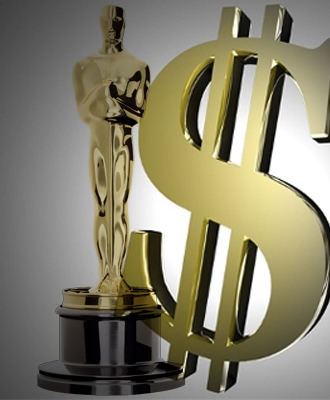
One thing is certain – the Oscar brand is alive and well. Veteran movie marketers that know how to capitalize on the brand image of this $500ish statue will enhance their own brands and make a lot more money.

When used in marketing campaigns, this validation stamp increases the desire of moviegoers to see the films and the talent being honored. It also keeps the movies in theaters longer boosting box office receipts. And it substantially increases DVD, streaming, download, and cable TV revenues.


Payoff for winning

According to IBISWorld, the best picture winners overs the past five years had an average production budget of $17 million and earned an average of $82.5 million at the box-office – generating a 485.6 percent margin. Winners earned…

  • $35.2 million in box office revenue, or 42.8%, before being nominated;
  • $29.4 million, or 35.6%, after they were nominated;
  • $17.9 million, or 21.7% after winning the Oscar.

In 2010, The King’s Speech, garnered $138 million in domestic box office – over $100 million more than was expected before it won. In Hollywood, talent agents and managers estimate that their clients will get a 20% boost in pay for their next film if they win the award for Best Actor or Actress.

Nominations pay off too

Even though winning the Oscar does wonders for movie careers and box office receipts, there is often considerable benefit in being nominated. Per IBISWorld, movies nominated for the Best Picture Oscar from the 2007 to 2011 awards seasons had an average production budget of $42.1 million and earned $104.2 million in box-office revenue for a 247.2 percent margin. Nominees earned…

  • $81.2 million in box office revenue, or 77.8%, before being nominated;
  • $19 million, or 18.2%, after they were nominated;
  • $4.2 million, or 21.7% after the awards show.

The King’s Speech was initially projected to gross $30 million worldwide. After receiving 12 Academy Award nominations, the revised estimate was over $200 million. After winning the Oscar for best picture, its worldwide box office surpassed $427 million with domestic DVD sales adding nearly another $32 million.

According to Reuters, an Academy Award nomination can boost ticket sales by one-third and cause a jump in the DVD sales of movies no longer in theaters. When you add downloads, streaming and cable TV revenues, the monetary rewards from receiving a nomination can be substantial.

Turning nominations into profits

Most important of all, award nominations can mean the difference between profits and bankruptcy for some movie productions. This is why marketers go to great lengths to promote their movies for the Oscars long before the nominations are announced in January. They spend from hundreds of thousands to millions of dollars promoting their films for an Oscar nomination.

It is reported that Harvey and Bob Weinstein spent millions promoting The King’s Speech and timed the release of the film to accelerate the Oscar buzz and boost the number of nominations. While actual figures are a highly-guarded secret in Hollywood, some peg the promotional investment in the King’s Speech to rival the $15 million the Weinsteins spent on promoting Shakespeare in Love in 1999.

Marketing investment in nominations pay off

The Oscar marketing strategy paid off again last year. The Weinstein marketing magic is credited with catapulting The Artist—a silent, black & white, French film—to 10 nominations and 5 Oscars including best picture. The previous year, the King’s Speech’s had 12 nominations to put it ahead of the field, and helped it to win. In fact, over the past 20 years, the film with the most nominations has won 15 times. This bodes well for this year’s two top nominees — Lincoln (12 nominations) and Life of Pi (11 nominations)—even though many are betting on Argo and Zero Dark Thirty.

Filed Under: Advertising, Current News, Marketing Insights

Go Inside Oscar Campaigning

February 20, 2013

It’s been a wonderful year in film and we are all routing for our favorite movies at this year’s Oscars. But were you aware of the important role that marketing and advertising plays in the success of a movie?

655 movies were released in 2012 and without advertising and marketing, we as movie-goers wouldn’t know about half the movies that come to theaters. If a film doesn’t make a big splash opening weekend you might as well consider it a box office casualty. So it seems promoting a film to the max is pretty essential these days—especially if you want a chance at getting recognized during award season.

But let’s skip past the movie trailers, the social media hype and the box office numbers. What happens after Seth MacFarlane declares you as a 2013 Academy Award nominee?

It’s called Oscar campaigning and it is a real thing. On average, studios can spend anywhere from $5 to $25 million mounting Oscar campaigns. This means that once the noms are out, the claws come out. Think schmoozing with Academy voters, VIP screening parties, brilliant public relations and frequent cast appearances with Leno, Jimmy and Conan.


Forget about the price of gasoline: The real skyrocketing expense this year is the Oscar race.

With two deep-pocketed studios locked into one of the closest best picture duels in recent memory and Academy Award voting extended by two weeks, the battle between “Argo” and “Lincoln” has sparked what several Hollywood executives say is the costliest campaign on record

The best picture contest recently has been dominated by independent productions such as “The Hurt Locker” and “The Artist” that couldn’t easily throw money around as if it were confetti. But in the current Oscar race, Warner Bros.‘ “Argo” and the Walt Disney Co.‘s “Lincoln” are each spending an estimated $10 million and potentially much more touting their film’s chances, up to double what a costly campaign has totaled in years past.

Other studios are only a little less profligate: Universal Studios (“Les Misérables”), 20th Century Fox (“Life of Pi”) and Sony Pictures (“Zero Dark Thirty”) all have spent lavishly on their “For Your Consideration” promotions.

Why is all this money spent?

A best picture win can bring in millions more at the box office, and help sell a ton more DVDs. What’s more, Oscar hardware can help woo image-conscious filmmakers into a studio’s fold. Disney, the distributor of “Lincoln,” has never won a best picture statuette, and Warner Bros. has a substantial interest in making “Argo” director Ben Affleck and producer George Clooney feel a lot of love.

Although the Academy of Motion Picture Arts and Sciences has curtailed the number of post-nomination screenings, parties and promotional email blasts, it has no power over paid advertising and related campaign expenses.

The spending blizzard includes covers in Hollywood’s trade newspapers (a single-page Variety cover can cost as much as $80,000), 30-minute TV spots highlighting a film’s bona fides (local broadcast time for recent half-hour “Lincoln,” “Argo” and “Silver Linings Playbook” ads can cost more than $100,000) and first-class air travel, limousines and hotels for filmmakers skipping around the globe to woo awards voters and collect lesser trophies (“Lincoln” star Daniel Day-Lewis doesn’t fly coach and stay at the local EconoLodge).

Outdoor “wallscape” advertising on buildings in prime real-estate locales can run more than $200,000, including production and installation costs. And then there are the high-end parties and receptions for the nominees, which, if held at tony establishments like the Beverly Hills Hotel, can set studios back $100,000 per event.

The expenditures begin months before Tuesday’s voting deadline by the Academy of Motion Picture Arts and Sciences. Studios start targeting various precursor awards groups such as critics organizations and show business guilds in the fall, often wooing votes with an array of gifts.

This year, members of the Broadcast Film Critics Assn. received four different lavish “Lincoln” books (including one devoted to Civil War recipes) as well as a special DVD that arrived in an inlaid, numbered box. After the 250-plus member group gave

Spielberg’s film a record 13 nominations, each voter received a personally signed thank-you note from the director on his letterhead stationery.

Universal sent every BFCA voter an iPod Shuffle (retail price: $50) pre-loaded with the songs from “Les Misérables.”

Universal said that its “Les Misérables” campaign, which is all but certain to bring a supporting actress Oscar to costar Anne Hathaway, cost less than $10 million.

After all the nomination and marketing it all comes down to the final voting for the Oscars which will end on Tuesday, February 19, at 5 p.m. PT. Ballots received after the deadline will not be counted.

The 5,856 voting members of the Academy of Motion Picture Arts and Sciences will have until the 19th to vote in up to 24 categories. This year the Academy for the first time offered its members the option of casting their ballots online. Final voting began on February 8.

Filed Under: Advertising, Current News, Marketing Insights

When an Ad comes to Life

November 28, 2012

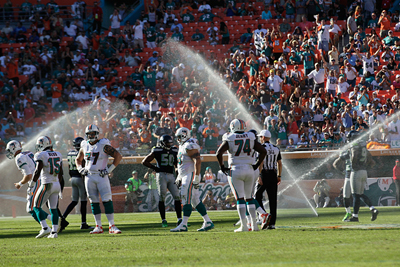
At the end of the third quarter of a matchup between the Miami Dolphins and the Seattle Seahawks (Nov. 25,2012), under a cloudless sky at Miami’s Sun Life stadium, the game was interrupted by a sudden downpour. The stadium’s sprinkler system had inexplicably turned on, drenching players and referees and momentarily delaying the action.

For football fans, the scene looked strangely familiar to a long-running TV spot in which fans at a Miami outpost of Buffalo Wild Wings hack into a local stadium’s sprinkler system to sabotage a game in the interest of prolonging it.

The Buffalo Wild Wings Commercial seemingly had come to life,  turning this  NFL sprinkler mishap into marketing gold for Buffalo Wild Wings! …for anyone in Advertising, a dream come true.


Below is the Buffalo Wid Wings commercial:


Filed Under: Advertising

The 12 Most Persuasive Words in Advertising

July 18, 2012

The psychology department at Yale University studied consumers’ reactions to certain words in advertisements. The results were compiled to create the 12 most persuasive words.

So what was the top word?    You.  ( You’re more likely to get your target audience involved if you address them directly.)

The others:

Money, save, new, results, health, easy, safety, love, discovery, proven and guarantee.

“You” was listed as the most persuasive word in every marketing study performed by the researchers.


Ok, as an example, lets attempt to create an ad that incorporates as many of these persuasive words as possible.

(fictitious ad)

You can discover an easy and proven way to save money and help guarantee your future health and happiness. Buy a home in the new Meadows Community . You will love the results!


Filed Under: Advertising, Marketing Insights

The top 7 mistakes made in a Sales Pitch

July 16, 2012

The “Pitch” is  an argument or other persuasion used in selling,  When an agency “pitches” their services or solutions to a potential client/buyer there is a minimal amount of time to compete for the clients attention, presenting only the concise information the client/buyer needs to discern differences and make a sound decision or judgement.

The “Pitch” is truly the “art” of communication. Sadly. regardless of  the slick visual presentation and excellent  handouts, a “pitch” communicated badly will cost you your audience.

  • Words Matter!
  • Information is often confused  with communication.

The most common mistake made in the “pitch”  is, rather than choose their words carefully, the presenter will inundate their listener with everything they know— often speaking more from their point of view rather than from their client’s vantage point and doing it far too casually. They put their buyers to sleep.

How often have you encountered, for instance, one of these “Sorry Seven”? (How often have you been one of them?)

1. Stuart Allstylenosubstance: Let me wow you with my fancy visuals as I tell you how you’re gonna love this!

2. Virginia Valleyspeak: “Like, this product is really good, because, like, it saves you all kinds of time and things, and like, you know, it’s competitively priced, uh, and also, you know, it’s, uh,…”

3. Bonnie Bubblegum: “Our programs are so great! And wait until you meet our team. They are just awesome. And our design is soooo cool. And our process is really neat.”

4. Wally Wallpaper: “We offer quality service, proven experience, and innovative thinking.” (No one ever says, “Our service is about average. Our experience is mixed. And, sometimes we come up with a good idea, but not too often.” Now, that would get a client’s attention!)

5. Donna Data-Death: “On this page is a pie chart showing our distribution of accounts by category. Thirty percent are in pharmaceuticals. Twenty-four percent are in travel. Sixteen percent are in real estate. Fifteen percent are in financial and fifteen are miscellaneous. On the next page are these categories by revenue. Thirty-five percent pharmaceuticals, twenty-five percent financial, twenty-five percent travel, twelve percent real estate and three percent miscellaneous. And on the next page is another page about this breakdown.”

6. Willie Windbag: “We will provide you with an integrated, digital, functionally parallel, global knowledge databank that synergistically empowers your network while incrementally enhancing your client relationship initiatives without negatively impacting your geographically dispersed human capital.”

7. Darren Doublespeak: “We’ve entered a period of retrenchment that will necessitate continued downsizing and greater efficiency in our human resource capacity.” (Translation: Business is bad, people are getting fired, and everyone still left with a job will be working overtime to keep it.)

Filed Under: Advertising, Management Insights

  • 1
  • 2
  • 3
  • …
  • 5
  • Next Page »

Delivering Customer Experience Excellence

Let's give em' something to talk about!

Contact Us

Copyright © 2026 · Archimedia Studios · Privacy Policy