Archimedia Studios

  • Home
  • Our Company
  • Expertise
  • Blog
  • Contact Us

Photo tips on the Direction of Light

March 21, 2011

The direction of light describes where the light source is in relationship to you and your subject. It can change the look of your subject dramatically and therefore requires you to adjust your metering techniques somewhat. In the sections that follow, What follows is a description of light based on the direction it’s coming from and make some suggestions for using it.

How you choose to use the direction of light depends on which of the attributes of that particular light may or may not suit your purpose for a given image

Frontlight

You have frontlight when the light source is on the same side of your subject as you are, like when the sun is behind you or when the flash on your camera goes off.

Following are the characteristics of frontlight:

  • It’s very even.
  • It doesn’t add contrast to the subject.
  • It shows colors and shapes well (unless the shapes are three-dimensional).
  • It’s good for a variations in subject tonality.
  • It usually minimizes texture.
  • It can make subjects look flat and two-dimensional.
  • It can be boring unless you have a subject with strong variations in color or tonality.

Frontlight isn’t great in all situations, but when it’s soft, it’s the best light for minimizing imperfections in human skin. (Now you know why they put that huge light in front of you when you got your school pictures back in the day.)

Avoid taking photos of people when they’re facing the sun. It may be frontlight, but it’s too harsh.

Even though the majority of people take lots of front-lit photos, you’ll be a better photographer, hone your exposure skills more quickly, and have more dramatic images if you take a higher percentage of backlit and side-lit photos.

Sidelight

If the sun or light source is to the side of your subject, you have sidelight – half the subject is lit and half is in shadow. The mix of light and shadow increases the contrast in the subject. The characteristics of sidelight are as follows:

  • It’s dramatic.
  • It can cast long shadows when the sun is low in the sky.
  • It makes subjects more three-dimensional.
  • It’s great at revealing texture.
  • It can reduce the amount of color information.
  • It’s harder to meter than frontlight.

Landscape photographers love sidelight, especially warm sidelight when the sun is low across the sky, because it creates long shadows across the frame.

Some subjects tend to lack color interest, but they really pop with the contrast between light and shadow that sidelight creates.

Backlight

You have backlight when the sun or other light source is behind your subject. It’s bold and dramatic, but it’s also a challenge to work with. Never fear, though. The photos you get when you use backlight are totally worth it.

Following are the characteristics of backlight:

  • It creates dramatic contrast.
  • It can significantly reduce the color information in your subject.
  • It emphasizes shapes (so it’s better for when you want shapes to take priority over color).
  • It can create dramatic rim lighting (a bright halo of light around your subject) when the sun is directly behind the subject.
  • It creates a fresh look because most people rarely try backlighting.
  • It can be used to create silhouettes.
  • It darkens unlit areas of the subject.
  • It’s the most challenging type of light meter.

Filed Under: Photography

Stay Ahead of your Competition – Facebook Advertising Tips

March 17, 2011

As with most things in life, to get ahead of your competition you only need to do a couple of things different to them to make a big difference. It’s no different with Facebook advertising and here are a few small tweaks you can make to your next campaign that can make a real difference to your end result.

Tip #1

This first tip is so obvious you’ll wonder why I’ve included it, but it is amazing how many people don’t do this when using Facebook advertising. Always have a call to action on your Facebook ads. That’s means words to tell your user to take an action. For example, Click here, Call us today, Like us. These are all simple calls to action, and without these you will find your ads tend to have a lower click through rate.

Tip #2

When you create your ad, set it up to use cost per click, not cost per impression. Cost per click means you only get charged when someone physically clicks on your Facebook ad. Cost per impression means you get charged per 1000 impressions and the rate for this is much lower than cost per click. However if you’re new to Facebook advertising and your ads don’t have a high click through rate but do get lots of impressions, you’ll quickly find that changing to cost per click will save you a lot of money.

Tip #3

Facebook have a recommended bidding range when you create an ad. This means the price is for example between 0.30 – 0.70 per click. Try setting your bid to somewhere in the middle of this range when you create your ad. Then work out what your click through rate is. Your click through rate is the percentage of people who click on your ad, compared to the number of impressions. If you can improve your click through rate by changing parts of your ad and split testing, then Facebook will reward you by giving your ad more impressions.

Tip #4

Once you’ve managed to increase your click through rate by split testing your ads, try lowering your bid price. A good click through rate is roughly between 13% – 20%. The reason you should do this is because Facebook advertising reward a good click through rate with more impressions. So you can get the same number of impressions and clicks by lowering your bid price!

Tip #5

When you select your bid price don’t select obvious amounts like 0.25, 0.30, 0.35 etc. Try 0.26 or 0.31 as not as many people will bid on these prices.

These tips are all very small tweaks you can make to your Facebook advertising campaigns. They can really increase the effectiveness of your ads and keep you ahead of your competition. However be sure that you only include them as part of your overall split testing strategy.

Filed Under: Social Media Marketing

How to find Facebook User Demographics and Totals By City

March 9, 2011

Are you missing out on opportunities to connect with potential customers on Facebook?

There is a very quick and simple way to discover user demographics according to city on Facebook. Follow these steps to find out how:

  1. Log into Facebook and click on the Ads and Pages button in the left column of the screen. Next, click the “Create An Ad” button. If you have already created an ad in the past, it will be a large green button on the upper right side of the screen. If not, it is a gray button toward the lower left side of the page.
  2. On the next screen, in the “Destinations” section select your “Page Name” from the dropdown menu
  3. Next, you will select the demographics information you are interested in. You are able to select according to city, age, marital status, etc.
  4. If you want to see the demographics of your current fan base: Scroll down to the “Connections on Facebook”:  section. Look for Connections, select “Only people who are fans of (your page name)

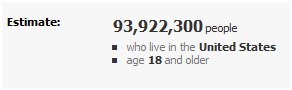
Scroll down  the page, you will see your estimates in the right column that look something like this:

Changing demographic options can  easily give you a current assessment of your fan base for marketing purposes or assist marketing efforts directed at a new audience.

Filed Under: Social Media Marketing

The End of Marketing?

March 9, 2011

Lately we hear much talk about the death of marketing, how easy it is for someone to set up a Facebook account, write a few Tweets and build a brand without the need for a professional marketer.

Really?

When is the last time you watched a commercial? Have you seen a magazine or newspaper in the last week? Did any direct mail make it to your mailbox this month? Was there an ad in your iPhone app? Did your grocery store print coupons when you checked out? Did you drive past any billboards on your way to work? Did your DVD have trailers? Was there a commercial during your Hulu movie?

In comparing marketing to food – it is like a carefully planned and constructed seven-course gourmet banquet, rather than a simple bologna sandwich.

Marketing channels

Online marketing is valuable. The instantaneous nature of the Internet makes marketing online a tool that provides high ROI and quick conversion. However, online marketing is just one  course served at the banquet.

There are many dishes served in that online marketing course including:

  • Article marketing
  • Video marketing
  • Email marketing
  • Websites
  • Blogs
  • Social Media
  • Backlinking…

Offline marketing is no less valuable. Brand awareness and recognition often begins with a commercial, a carefully placed ad in the mall, a radio or television spot. The offline course may not suit all tastes, but no feast is complete without them, and that course often provides the dish people first recognize and associate with comfort and tradition.

Marketing is rich; the tastes are varied and distinct. Understanding how those subtle and complex tastes work together and affect each other is the difference between marketing in a silo and building holistic campaigns. It is also the difference between the amateur and his Facebook page and the indelible mark created by a brand that is well built.

Filed Under: Marketing Insights

List Segmentation important to know how to use it

March 1, 2011

Do you collect email addresses on your webaite or third party sites such as Reverbnation?  Are you maximizing this information to increase your sales?

Put simply, list segmentation targets your communications and increases the relevancy of your messages—resulting in higher open and click-through rates, enhanced customer loyalty, and increased sales. In email marketing, the more relevant your campaign is, the better the response and the greater the conversions.

The advantages of segmentation are obvious, and if it’s done correctly you can avoid opt-outs and being labeled a spammer. It also goes a long way toward improving your email deliverability and online reputation. Marketers who send relevant email campaigns enjoy lower opt-out rates than those who send the same email to everyone on their list.

Of course, segmenting your precious lists can be an unnerving task, especially if you have never attempted it before. Below are some of the most effective methods of segmentation, but don’t panic—you don’t need to try them all at once. Just start with the information you have, and work your way from there.

Your segmentation can be based on any combination of the following criteria:

  • Prospective Customers vs. Current Customers. This is an important segmentation. What you will avoid is having a customer receive an email as if he or she were a prospect, offering better deals than the ones customers were offered. It’s a bad move, and the customer won’t trust that he or she is unique in your eyes.
  • Demographics (ZIP/postal code, gender, age, occupation). If your subscriber lives in New York, why are you sending her specials about flights between Texas and Alaska? Or if your subscriber is a 25-year-old woman, why are you sending her emails for specials on “Fashions for Mature Women”? You get the idea. Take note of demographics, and your relevant emails will give your subscriber the impression that you are listening (which you are) and will help garner the results you seek.
  • Behavioral Data. Open and click-through rates, latest or last visit—that type of information can help you target who is more responsive to your emails. The subscribers who open your emails all the time or regularly can perhaps be tested with receiving more frequent emails.
  • Recent Subscribers. Recent could be 3-6 months, or it could be since the last campaign you sent a month ago. Either way, the “newbies” should be separated and paid special attention to; don’t be so quick to finish the “courting period.” You could offer more deals or discounts on your products or services, thereby giving them the feeling that you haven’t just “loved them and left them.”
  • Inactive Subscribers. Any subscriber who hasn’t opened or clicked on your email over an extended period of time can be deemed “inactive.” Instead of writing them off as a lost cause, put them into a separate group and send them a targeted reactivation campaign in the near future.
  • Preference Surveys /Interest-Based Preferences. Don’t be scared to ask for information you don’t have, such as new interests and updated email addresses. Tell customers that it will help you send more relevant emails, and remind them that you will maintain their privacy at all cost.
  • Major Clients. Anyone who spends more than $1,000 at a given time, while others spend less than $100, should always get special attention. Offer platinum status, free shipping, or gifts with their next purchase—anything that makes your customers think you appreciate their loyalty, which you do, of course.
  • Purchasing Habits. Another great way to segment is by identifying what type of product your customers bought, how much they spent, and which store they bought from. Your next email might read, “This week, 25% discount on all clothing/baby goods/garden equipment over $50 at our Portland branch.”

Once you have segmented your lists (no matter how extensively), it’s vital to keep the categories up to date. Schedule a regular date to review your segments, annually or bi-annually (at least). Look at what campaigns each customer is opening and consider re-categorizing them, if necessary. But before you re-categorize them, ask them—in an email—what they are interested in, and let them choose their own categories.

Filed Under: Marketing Insights

  • « Previous Page
  • 1
  • …
  • 47
  • 48
  • 49
  • 50
  • 51
  • …
  • 71
  • Next Page »

Most Recent

  • Marvel’s Doctor Strange kicks Off The Blockbuster Season With A Magical $185M Opening
  • Disney Marvel’s ‘Shang-Chi’ Shatters Labor Day Box Office Record
  • Marvel’s ‘Black Widow’ Debuts With $80 Million in Theaters, $60 Million on Disney Plus
  • Latest List Of Upcoming Marvel Movies
  • Walt Disney Studios Announces Updated Release Schedule

Archives

Delivering Customer Experience Excellence

Let's give em' something to talk about!

Contact Us

  • Facebook
  • LinkedIn
  • Twitter

Copyright © 2026 · Archimedia Studios · Privacy Policy