Archimedia Studios

  • Home
  • Our Company
  • Expertise
  • Blog
  • Contact Us

Essential Video Marketing Tips for Indie Artists.

September 8, 2011

If you are an independent recording artist or band,  you are  a small business owner and more importantly you are a “Brand” and that brand is you!

If Video is not integrated into your marketing strategy, then you should start now!

Why?…

Because video engages, persuades and motivates like no other marketing tool. Not to mention that Youtube is statistically becoming the media of choice for your younger audience to listen to music.  It may be appropriate to alter YouTube’s tag line to “Broadcast and Brand Yourself !”  

However, not all video is good video. Once video enters into your marketing strategy, then it is part of your Brand, part of your portfolio. You must be very aware of the impression and experience you leave your audience when they view your videos.

Here are a few of our Essential Video Marketing tips for Youtube to get you  started on the right path.

1. Use a Keyword Rich File Name

Even though the file name is not exposed to viewers, the keywords in the video file name may count toward your ranking in the YouTube search results.  It’s better to use a file name such as youtube-video-cma-live-perfornace.mov rather than video-2011-08-25.mov

2. Set the Video to Unlisted During the Upload

You can change the default setting of Public to Unlisted while the video is uploading, so that the video is not public until you have had a chance to properly set all the options. Unlisted is better than Private if you want to send the link to a few people for review before you make the video public.

3. Use a 16:9 Aspect Ratio for Content

For video footage, use a 16:9 aspect ratio. 720p is fine for YouTube, since most viewers don’t change the resolution from a lower default.

4. Keep Your Video Short

People generally have short attention spans.

Video blogs should be no longer than three minutes. Some people even consider this to be too long and recommend two minutes as a maximum length.

Music videos are obviously the length of the track. However, concert footage should either be a montage of multiple songs or each song should be cut into a separate video.

DO NOT group multiple tracks in one video and produce a very long video. People will abandon it!

5. Consider Your Mobile Audience

An ever increasing number of people access YouTube videos via their iPhones, Androids and other devices. Avoid using any tiny print or any other elements that can’t be easily read on these devices.

Get the Audio Right

Even the best video production can be rendered ineffective by poor voice audio. This is probably one of the most annoying things we see on Youtube, A great video but audio that is either to soft, noisy, vocals drowned out by instruments,  or over modulated (distorted) .

Use audio effects, especially Auto-Tune sparingly! As you edit your audio remember just because you have effects available to use, doesn’t mean that you should. An overly Auto-Tuned production may send “red flags” that the artist may be hiding vocal weaknesses that could be uncovered in a live or accoustic perfromance.

Use a tripod!

Nothing is worse and more annoying and dizzying  to a viewer than a bouncy video resulting from a videographer ‘s unsteady hand.

Not all videos need to be posted.

You are your Brand!  Thus all materials that you present to your fans reflect on the type of artist that you are.

It’s not a numbers game. It doesn’t matter how many videos you have on Youtube but the ones that you are displaying should be your best!

Show only the videos with the best video and audio quality.

The videos on your Youtube Channel should be the most current snapshot of the artist that you are today.

Videos of you singing in a local talent show when you were much younger  probably will not interest a potential Label, booking agent, sponsor or fan.


Filed Under: Marketing Insights

Is this the Future of Sketching?

September 5, 2011

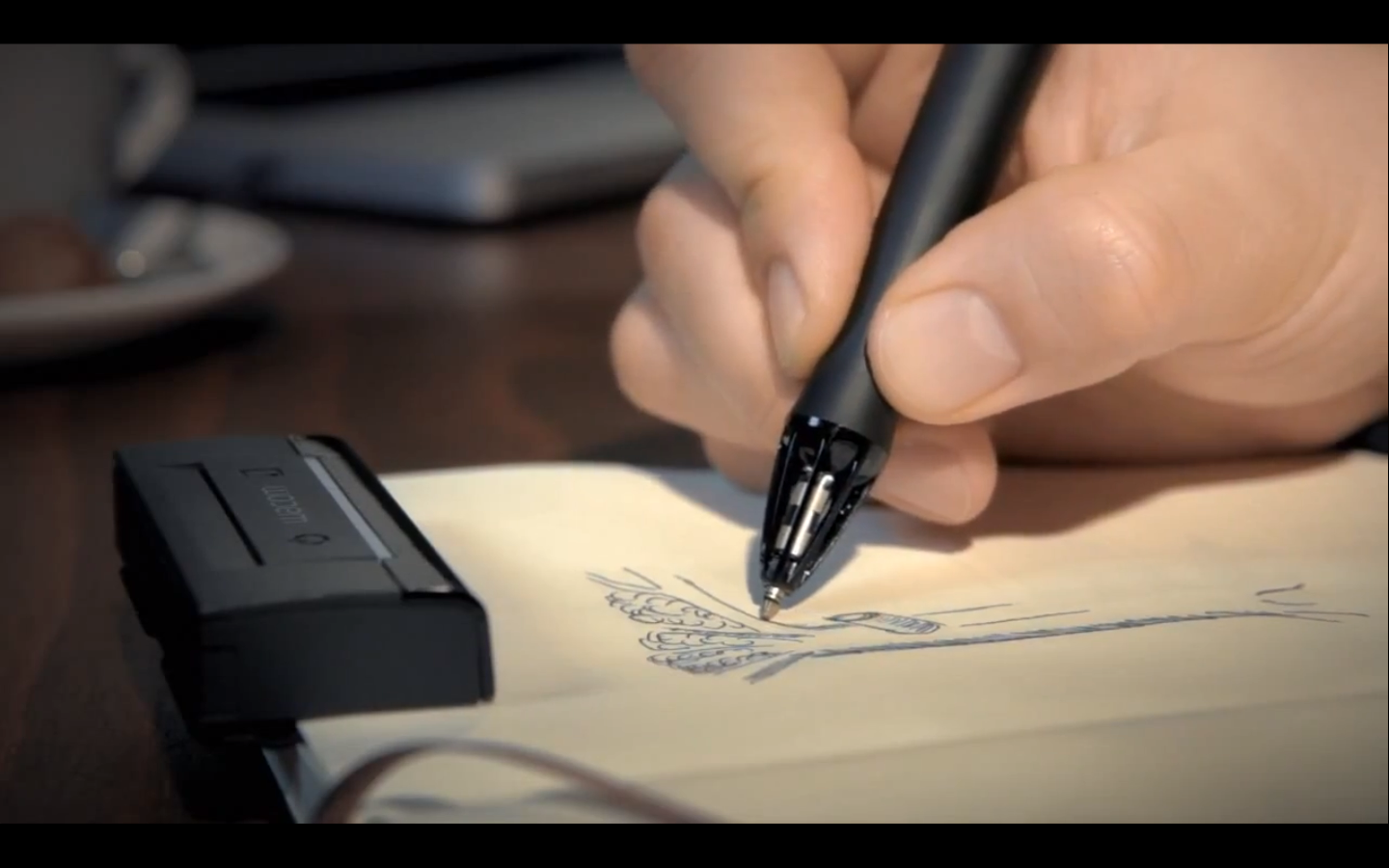
New stylus product from Wacom set to blur the line between traditional analogue and digital sketching…

Sketching is perhaps the most liberating part of the design process, you are completely unrestrained by design software or computers. However often translating that form into a digital environment for tweaking and refinement isn’t so streamlined. Wacom’s new product is seeking to bridge that gap between ideation sketching and digital development and editing…

“The Inkling digital sketch pen captures a digital likeness of your work while you sketch with its ballpoint tip on any sketchbook or standard piece of paper. Designed for rough concepting and creative brainstorming, Inkling is ideal for the front end of the creative process…”

The major advantage of this product is the freedom to sketch away from the computer, away from the traditional Wacom type tablet), indoors or outdoors, but still quickly generate vector paths for drawings or laser cutting. Wacom have clearly demonstrated an understanding of the ubiquitous computing needs of designers, illustrators, makers, doodlers, etc..

The Inkling receiver has been built to be very versatile and can be clipped to any sketchbook or piece of paper. It employes infrared and ultrasonic technologies to pick up your hand sketches, these can be saved as either vector lines or pixels in a number of file formats.

“In addition to capturing your sketch, stroke by stroke, Inkling allows you to create layers in digital files while you sketch on paper. Digital files are transferred to your computer…”

This product cost about $199.00

Filed Under: Graphic Design

Should you use a softbox, or an umbrella?

September 4, 2011

Should you use a softbox, or an umbrella? Even though they serve similar purposes, which is to provide a larger light source (thereby softer light), there are several key differences between a softbox and an umbrella.

Softbox

This is the ideal light shaping tool for portraits, because of its versatility in controlling light spill. If you are shooting inside a small room, a softbox enables you to control the spill of light. This means that the subject (the person or object you are photographing) is illuminated in soft light, while the background (walls/ceiling/floor) receives minimal, if any, light spill or light contamination. This is useful for shooting portraits that require a darker or even pitch black background. Yes, you can even create a pitch black background without the use of a black backdrop.

A softbox makes creating flattering portraits very easy. You can use it as a key light, fill light or even a hair light. It all depends on the lighting conditions at the location you are shooting.

There are several types of very portable softboxes that you can get. Get the largest one available, as it produces the softest light.   The softbox has 2 baffles to filter and soften light even further.

Umbrella

The umbrella’s distinct advantage is portability and mobility. You can bring several umbrellas on an outdoor shoot without any inconvenience. When opened, they provide beautiful soft light, by converting your light (speedlight or a more powerful monolight with battery pack) to a larger light source.

What the umbrella lacks in comparison to a softbox is control of light spill. When used indoors, an umbrella lights up a large part of the room, decreasing your control over how dark your background can be.

There are also different types of umbrellas.

A shoot-through is a translucent white umbrella which your light shoots through and onto the subject. The umbrella shaft is pointed away from the subject, thereby reducing any chances of it accidentally injuring your subject.

The other type is a reflective umbrella, where your light shoots into, and then bounces back onto the subject. This type of umbrella inevitably has its shaft pointing at the subject, so you can’t really go in as close as a shoot-through umbrella would allow. The closer you get to the subject, the softer the light. As the light wraps around the subject, it reduces harsh shadows.

Filed Under: Photography

It’s not what you look at it’s what you see…

September 4, 2011

“It’s not what you look at that matters, it’s what you see.”

– Henry David Thoreau

While Thoreau did not say this about photography, it’s about the best advice you can give to someone in our profession.

Photography is not about pressing a button on a camera. It is about telling a story — communicating what you see when you look at your subject.

Same Subject, Different Stories

Different photographers can photograph the same subject but tell a different story. This is true for all types of photography.

For example, let’s say you are a sports photographer covering a basketball game. The game is very close; there is a lot of excitement in the game and on the sidelines.

As the clock winds down, another photographer might focus all his attention on the court. But you spot a player on the sidelines, waving a towel to cheer on his team, that captures the emotion of the game even better.

Or let’s say you are hiking in the mountains and see a stream surrounded by lush vegetation.

Another photographer might go with a wide shot, but this seems boring to you. So you find an interesting rock formation to place in the foreground, providing contrast and giving a stronger feel for where you are.

Or perhaps you decide to go with a detail or macro shot instead. Why photograph a whole tree when a single leaf tells your story?

Training Yourself to Notice

  • We should always be looking for pretty light, interesting juxtapositions, leading lines and other visually stimulating subjects.
  • At the same time, we should always be looking for stories to tell.
  • Peer inside a building with unusual windows. See if someone is looking out, or reading a book, or painting.
  • Walk through an old cemetery. Maybe you’ll find someone pressure-washing the headstones.
  • Drive alongside a long, winding white fence. Perhaps you’ll come across a horse being fed by its owner.

Always be observing. Always be looking for interesting subjects, and thinking about what elements would make your photos even better.

The more you do this, the more often you will come across these elements — because you have trained yourself to notice them.

Filed Under: Photography

A sign that your Marketing Strategy may be failing…

September 1, 2011

How can you tell that your marketing strategy may not be working well?

(answer) If you continually hear remarks that  you, your product or business is the “the best kept secret”.

Filed Under: Marketing Insights

  • « Previous Page
  • 1
  • …
  • 37
  • 38
  • 39
  • 40
  • 41
  • …
  • 71
  • Next Page »

Most Recent

  • Marvel’s Doctor Strange kicks Off The Blockbuster Season With A Magical $185M Opening
  • Disney Marvel’s ‘Shang-Chi’ Shatters Labor Day Box Office Record
  • Marvel’s ‘Black Widow’ Debuts With $80 Million in Theaters, $60 Million on Disney Plus
  • Latest List Of Upcoming Marvel Movies
  • Walt Disney Studios Announces Updated Release Schedule

Archives

Delivering Customer Experience Excellence

Let's give em' something to talk about!

Contact Us

  • Facebook
  • LinkedIn
  • Twitter

Copyright © 2026 · Archimedia Studios · Privacy Policy